
Uncategorized

Uncategorized

why data matters in digital marketing

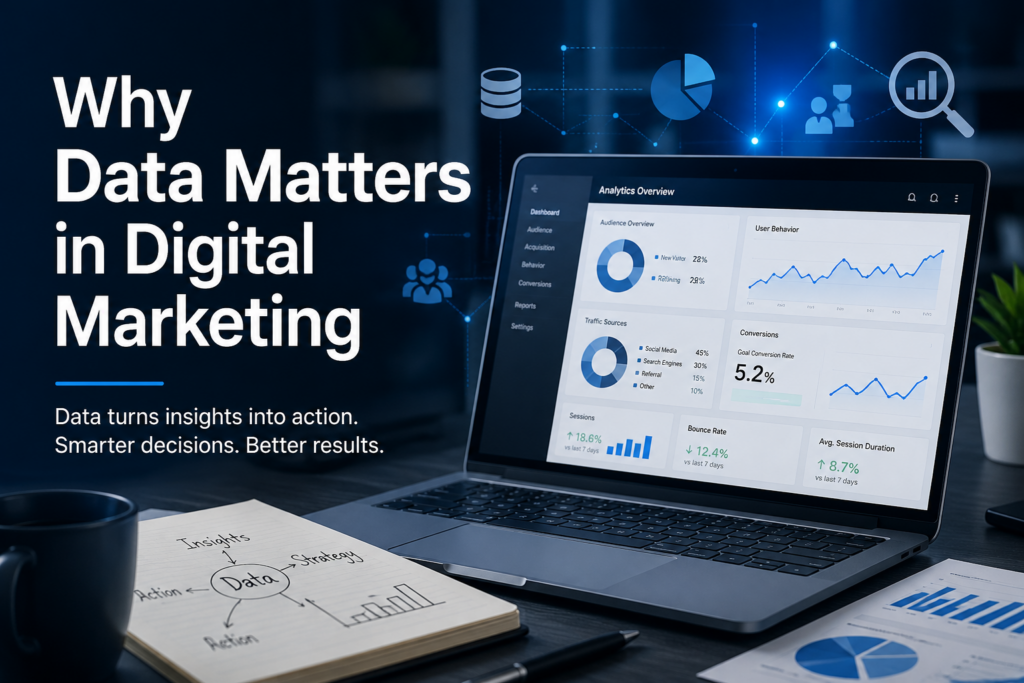
Why Data Matters in Digital Marketing In today’s fast-paced digital world, marketing is no longer based on assumptions or guesswork. Businesses now have access to valuable information that helps them understand their audience, improve their strategies, and achieve better results. This information, known as data, has become one of the most powerful tools in digital marketing. Every action a user takes online generates data. Whether someone visits a website, clicks on an advertisement, likes a social media post, or makes a purchase, that interaction provides valuable insights. Marketers use this information to understand customer behavior and make informed decisions that improve marketing performance. One of the biggest advantages of data-driven marketing is the ability to understand the target audience. Successful marketing starts with knowing who your customers are, what they are interested in, and how they interact with your brand. Data helps businesses identify audience demographics, interests, online behavior, and purchasing patterns. With this knowledge, marketers can create more relevant content and campaigns that resonate with the right people. Data also plays a crucial role in measuring the effectiveness of marketing campaigns. In traditional marketing, it was often difficult to determine whether a campaign was successful. Digital marketing, however, provides access to real-time metrics and analytics. Businesses can track website traffic, social media engagement, email open rates, conversion rates, and many other performance indicators. These insights help marketers understand what is working and what needs improvement. For example, imagine a company running two different social media advertisements. One advertisement receives a high number of clicks, while the other receives very little engagement. By analyzing the data, marketers can identify the factors that contributed to the success of the first advertisement and apply those learnings to future campaigns. This process helps businesses maximize their marketing efforts and achieve better outcomes. Another important benefit of data is personalization. Modern consumers expect personalized experiences when interacting with brands online. Data allows businesses to understand customer preferences and deliver content that is relevant to individual users. Personalized marketing can improve customer engagement, build stronger relationships, and increase conversion rates. When customers feel that a brand understands their needs, they are more likely to trust and engage with that brand. Data also helps marketers make smarter budgeting decisions. Marketing budgets are often limited, so it is important to invest resources where they will generate the greatest return. By analyzing campaign performance, businesses can identify which channels, advertisements, and strategies deliver the best results. This allows them to allocate their budget more effectively and avoid spending money on activities that do not contribute to business growth. Search Engine Optimization (SEO) is another area where data plays a significant role. SEO relies heavily on data such as keyword performance, search trends, website traffic, and user behavior. By analyzing this information, marketers can optimize their websites to improve search engine rankings and attract more organic traffic. Data-driven SEO strategies help businesses increase visibility and reach potential customers more effectively. Social media marketing also depends on data and analytics. Platforms such as Instagram, Facebook, LinkedIn, and X provide detailed insights about audience engagement and content performance. Marketers can see which posts generate the most interactions, what times audiences are most active, and which types of content perform best. These insights help businesses create more engaging content and strengthen their social media presence. As a digital marketing student, I have learned that data is much more than numbers and charts. It tells the story behind customer behavior and business performance. Every metric provides an opportunity to learn, improve, and make better decisions. Understanding how to interpret data is becoming an essential skill for anyone pursuing a career in digital marketing. However, collecting data alone is not enough. Businesses must know how to analyze and use that data effectively. The true value of data lies in turning insights into action. Marketers who can identify patterns, understand customer needs, and make informed decisions based on data are more likely to achieve successful outcomes. Looking ahead, the importance of data in digital marketing will continue to grow. Advances in technology, artificial intelligence, and analytics tools are providing businesses with even more opportunities to understand their customers and optimize their marketing strategies. Companies that embrace data-driven decision-making will be better positioned to compete in an increasingly digital marketplace. In conclusion, data has become the foundation of modern digital marketing. It helps businesses understand their audience, measure performance, personalize customer experiences, improve marketing strategies, and make smarter decisions. By leveraging data effectively, marketers can create campaigns that deliver meaningful results and support long-term business growth. In a world where digital interactions generate valuable insights every second, data is not just important—it is essential for success.
Uncategorized

Understanding Your Target Audience: The Key to Successful Marketing

Understanding Your Target Audience: The Key to Successful Marketing Every successful marketing campaign begins with a deep understanding of the target audience. No matter how creative a marketing strategy may be, it is unlikely to deliver results if it fails to connect with the right people. Understanding who your audience is, what they need, and how they behave is one of the most important aspects of digital marketing. A target audience refers to the specific group of people most likely to be interested in a product, service, or brand. These individuals often share common characteristics such as age, location, interests, lifestyle, and purchasing behavior. By identifying and understanding these characteristics, businesses can create marketing messages that resonate with their audience and encourage engagement. One of the biggest mistakes businesses make is trying to market to everyone. While it may seem beneficial to reach as many people as possible, broad marketing often leads to poor results. Effective marketing focuses on a clearly defined audience. When businesses understand exactly who they are speaking to, they can create more personalized and impactful campaigns. Understanding your target audience starts with research. Businesses can gather information through surveys, customer feedback, social media insights, website analytics, and market research. These tools provide valuable data about customer preferences, behaviors, and challenges. The more information a business has about its audience, the better it can tailor its marketing efforts. Audience demographics play a significant role in marketing strategy. Factors such as age, gender, income level, education, and location can influence how people respond to marketing messages. For example, content designed for college students may look very different from content created for working professionals. Understanding demographic information helps marketers create content that feels relevant and relatable. In addition to demographics, understanding audience interests and behavior is equally important. Digital platforms provide valuable insights into what users engage with online. Businesses can analyze which content performs well, what topics generate discussions, and how users interact with their brand. These insights help marketers create content that captures attention and encourages interaction. Customer pain points are another important factor to consider. Pain points are the problems, challenges, or needs that customers are trying to solve. Successful marketing focuses on addressing these challenges and demonstrating how a product or service can provide value. When businesses understand their audience’s concerns, they can position their solutions more effectively. Creating customer personas is a popular method used by marketers to better understand their audience. A customer persona is a fictional representation of an ideal customer based on real data and research. Personas often include details such as age, occupation, goals, interests, and challenges. By creating customer personas, marketers can develop campaigns that feel more personalized and relevant. Social media has made audience analysis easier than ever before. Platforms such as Instagram, Facebook, LinkedIn, and X provide detailed insights into audience demographics and engagement patterns. Businesses can see which content receives the most interaction, what times audiences are most active, and what topics generate interest. These insights help marketers make informed decisions and improve content performance. Understanding the target audience also improves advertising effectiveness. Digital advertising platforms allow businesses to target specific audiences based on demographics, interests, behaviors, and online activity. This ensures that advertisements reach the people most likely to engage with the brand. As a result, businesses can improve conversion rates while making better use of their advertising budgets. Content marketing becomes more effective when it is designed with a clear audience in mind. People are more likely to engage with content that addresses their needs and interests. Whether it is a blog post, social media update, email campaign, or video, understanding the audience helps marketers create content that delivers value and builds trust. As a digital marketing student, I have learned that successful marketing is not just about promoting products or services. It is about understanding people. Every audience is different, and effective marketers take the time to learn about their customers before developing strategies. The more businesses understand their audience, the more meaningful and impactful their marketing efforts become. In today’s competitive digital landscape, businesses that understand their audience have a significant advantage. They can create better experiences, build stronger relationships, and achieve better marketing results. Instead of relying on assumptions, they use insights and data to guide their decisions and connect with customers more effectively. In conclusion, understanding your target audience is the foundation of successful marketing. It helps businesses create relevant content, improve advertising performance, address customer needs, and build lasting relationships. By investing time in audience research and analysis, businesses can develop strategies that not only attract attention but also drive meaningful engagement and long-term growth.

Uncategorized

Why Social Media Marketing Matters for Small Businesses

Why Social Media Marketing Matters for Small Businesses In today’s digital age, social media has become an essential part of everyday life. Millions of people use platforms such as Facebook, Instagram, LinkedIn, X, and TikTok to connect with friends, discover new products, and engage with brands. For small businesses, social media marketing is no longer just an option—it is a powerful tool for growth, visibility, and customer engagement. Unlike traditional forms of advertising, social media provides businesses with a direct way to communicate with their audience. It allows brands to build relationships, share valuable content, and create meaningful interactions with customers. For small businesses operating with limited budgets, social media marketing offers an affordable and effective way to compete in today’s competitive marketplace. One of the biggest advantages of social media marketing is increased brand awareness. Before customers can buy from a business, they need to know it exists. Social media platforms provide businesses with the opportunity to reach a large audience and introduce their products or services to potential customers. By consistently posting engaging content, businesses can increase their visibility and remain top of mind among their audience. Social media also helps businesses connect directly with their customers. Traditional marketing often involves one-way communication, where businesses simply promote their products or services. Social media, however, encourages two-way communication. Customers can comment on posts, ask questions, share feedback, and interact with brands in real time. This level of engagement helps businesses build trust and establish stronger relationships with their audience. For small businesses, building trust is especially important. Customers are more likely to support businesses they feel connected to and trust. Through social media, businesses can showcase their values, share behind-the-scenes content, and highlight customer experiences. These activities help create authenticity and strengthen customer relationships. Another important benefit of social media marketing is its cost-effectiveness. Traditional advertising methods such as television, radio, and print media can be expensive and often require significant budgets. Social media allows businesses to reach a large audience at a fraction of the cost. Even with a limited budget, small businesses can create engaging content, run targeted advertisements, and generate meaningful results. Targeted advertising is one of the most powerful features of social media marketing. Platforms such as Facebook and Instagram allow businesses to target users based on demographics, interests, location, behavior, and other factors. This means businesses can ensure their marketing efforts are reaching the people most likely to be interested in their products or services. As a result, advertising budgets can be used more efficiently and effectively. Social media marketing also helps drive website traffic and generate leads. By sharing valuable content and including links to their website, businesses can encourage users to learn more about their products and services. Increased website traffic often leads to higher conversion rates and more business opportunities. Whether the goal is generating sales, collecting inquiries, or increasing newsletter subscriptions, social media can play a significant role in achieving these objectives. Content marketing and social media work hand in hand. Businesses can use social media platforms to share blog posts, videos, infographics, and other forms of content that provide value to their audience. Valuable content not only attracts attention but also positions businesses as trusted sources of information within their industry. Over time, this can help establish authority and credibility. Customer feedback is another valuable aspect of social media marketing. Businesses can quickly learn what customers like, dislike, and expect from their products or services. Reviews, comments, and messages provide insights that can help improve customer experiences and business performance. Listening to customer feedback demonstrates that a business values its audience and is committed to meeting their needs. Social media also plays a crucial role in customer service. Many customers now prefer to contact businesses through social media rather than traditional channels such as phone calls or emails. Responding quickly to questions, concerns, and inquiries helps businesses improve customer satisfaction and strengthen their reputation. In addition to customer engagement, social media provides valuable analytics and insights. Businesses can track metrics such as reach, engagement, impressions, clicks, and follower growth. These insights help marketers understand which strategies are working and where improvements can be made. Data-driven decision-making enables businesses to optimize their content and achieve better results over time. The rise of video content has further increased the importance of social media marketing. Short-form videos, reels, stories, and live streams have become popular ways for businesses to connect with audiences. Video content often generates higher engagement than traditional posts and provides businesses with creative opportunities to showcase their products and services. As a digital marketing student, I have learned that social media marketing is much more than posting pictures and updates. It is about understanding audience behavior, creating meaningful content, building relationships, and delivering value. Successful social media marketing requires consistency, creativity, and a clear strategy focused on business goals. Small businesses that invest in social media marketing gain a competitive advantage. They can reach new audiences, build stronger customer relationships, improve brand awareness, and increase sales opportunities. In a world where consumers spend a significant amount of time online, having a strong social media presence is essential for long-term success. In conclusion, social media marketing has become one of the most valuable tools available to small businesses. It provides an affordable way to increase visibility, engage with customers, build trust, generate leads, and drive growth. By using social media strategically and consistently, small businesses can strengthen their digital presence and create meaningful connections with their audience. As technology continues to evolve, social media will remain a key component of successful business growth in the digital era.

Scroll to Top