
Understanding Your Target Audience: The Key to Successful Marketing
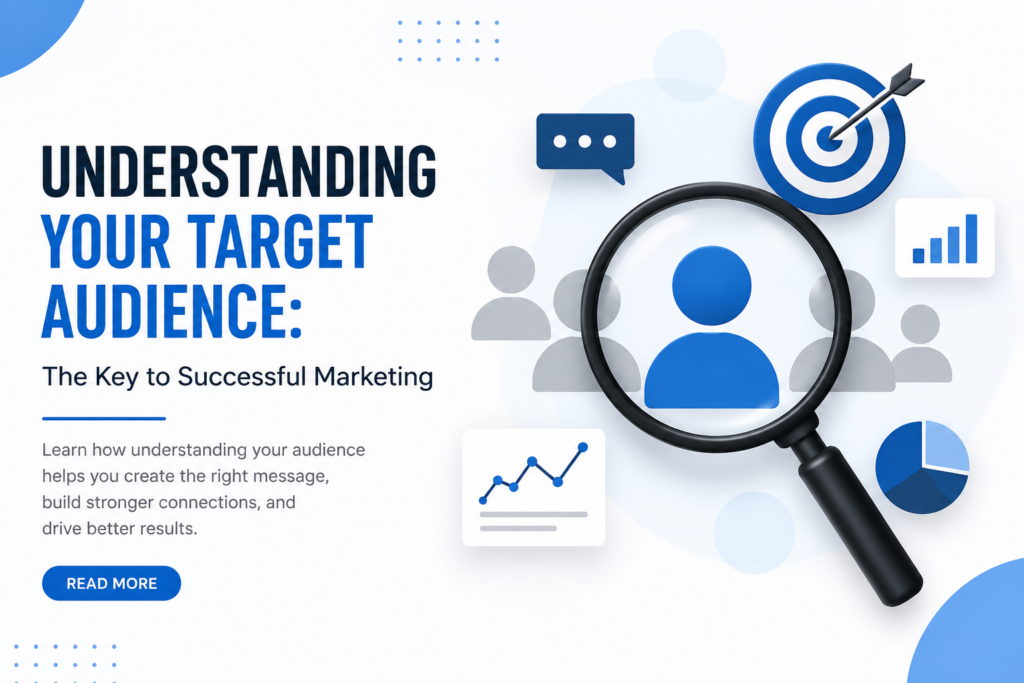
Every successful marketing campaign I’ve come across starts in the same place: actually understanding your target audience. Not in a vague “young professionals” kind of way, but really knowing who you’re talking to. It doesn’t matter how clever the ad is or how good the caption sounds — if it’s not landing with the right person, none of that effort really means much.
A target audience is basically the group of people who are actually likely to care about what you’re offering. They usually have things in common — age, where they live, what they’re into, how much they earn, how they spend time online. Once you actually understand your target audience at that level, your marketing stops feeling like you’re shouting into a crowd and starts feeling more like you’re just talking to someone.
I’ll be honest, one mistake I made early on — and I still see a lot of people make — is trying to appeal to everyone. It feels like the safe move. Why would you exclude people, right? But broad marketing almost never works the way you’d hope. If your message is built for “everyone,” it usually ends up resonating with no one in particular. Understanding your target audience means accepting you’re not trying to please the whole internet. You’re trying to reach a specific group who might actually buy from you.
So how do you figure that out? Research, mostly. Real research — surveys, feedback, website analytics, whatever your social media insights are telling you. Not guesses. The businesses that do well online usually aren’t the ones with the biggest budget. They’re the ones who bothered to actually learn who they’re talking to before spending money on ads.
Demographics help, sure — age, income, education, location. But honestly, that’s just the surface. A 22-year-old college student and a 45-year-old working parent might technically fall into the same “interested in fitness” bucket, but they’ll respond to completely different tone, platform, even time of day. Understanding your target audience means going past the label and asking what’s actually shaping how this particular person thinks and buys.
Behavior tells you more than demographics ever will, though. What do people actually stop scrolling for? What gets a comment, a share, or just gets ignored completely? Every platform is basically handing you this data already. You don’t have to guess what your audience likes — they’ve already shown you, if you’re paying attention.
This is where pain points come in too — the actual problems people are dealing with day to day. Good marketing isn’t just “here’s our product,” it’s showing someone you actually get what they’re struggling with, and that you might genuinely help. This is why a lot of marketers build out customer personas. Not as some fun creative exercise, but as a way to keep every piece of content grounded in an actual person instead of a vague guess.
One thing I didn’t fully realize at first — this isn’t a one-time thing. Audiences shift. Trends move. What worked six months ago might feel stale now. Businesses that keep revisiting who they’re targeting, instead of setting it once and forgetting it, tend to stay relevant a lot longer than the ones who don’t.
There’s also a difference between who buys and who actually influences that decision. Sometimes the person using something isn’t the one paying for it — like a parent buying for their kid, or a manager approving a purchase someone else on the team actually wanted. Understanding your target audience sometimes means paying attention to both sides of that relationship, not just whoever hits “buy” at the end.
Competitor research helps here too, honestly more than people give it credit for. Watching who your competitors are targeting — and more importantly, who they’re missing entirely — can show you real gaps. Sometimes the best insight isn’t even about your own customers. It’s about noticing what nobody else in your space is bothering to address.
And none of this really works without some actual empathy mixed in. Data tells you who your audience is. It takes something else — curiosity, maybe — to understand why they make the choices they do. The best marketing I’ve seen doesn’t feel like it came out of a spreadsheet. It feels like whoever made it actually understands what a normal day looks like for the person they’re trying to reach.
Social media makes a lot of this easier than it used to be, at least. Instagram, Facebook, LinkedIn, and X all hand you insights now — what people engage with, when they’re online, what topics actually get a reaction. Marketers a decade ago just didn’t have this kind of visibility into their audience.
Digital advertising benefits from all this too. Instead of paying to show your ad to literally anyone, you can target the specific people who are actually likely to respond, based on their interests, behavior, and demographics. For small businesses especially, where every rupee spent on ads has to count, that’s a genuinely big deal.
Content marketing works the same way. People engage with content that actually speaks to something they care about — a blog post, a social update, an email, doesn’t matter. Understanding your target audience is what makes the difference between content that gets scrolled past and content that actually gets read.
Testing ties all of this together, I think. Running small campaigns, comparing two versions of the same message, watching which one actually performs better — that replaces guessing with real evidence. Instead of assuming what your audience wants, you let their actual behavior tell you.
I’m still learning a lot of this myself as a digital marketing student, but if there’s one thing that’s really stuck with me, it’s that marketing was never really about the product. It’s about the person on the other end of it. Every audience is different, and the time spent actually learning who they are ends up paying off in every campaign that follows.
In today’s crowded digital space, businesses that take the time to actually understand their audience have a real advantage. If you’re trying to figure out your own audience and could use a hand putting a strategy together, feel free to look at my digital marketing services — happy to help They build better experiences, stronger relationships, and get better results — not because they got lucky, but because they stopped guessing and started paying attention.
In the end, understanding your target audience isn’t just one step in a marketing plan. It’s kind of the whole foundation everything else gets built on top of.