
Author name: farzin

Uncategorized

why data matters in digital marketing

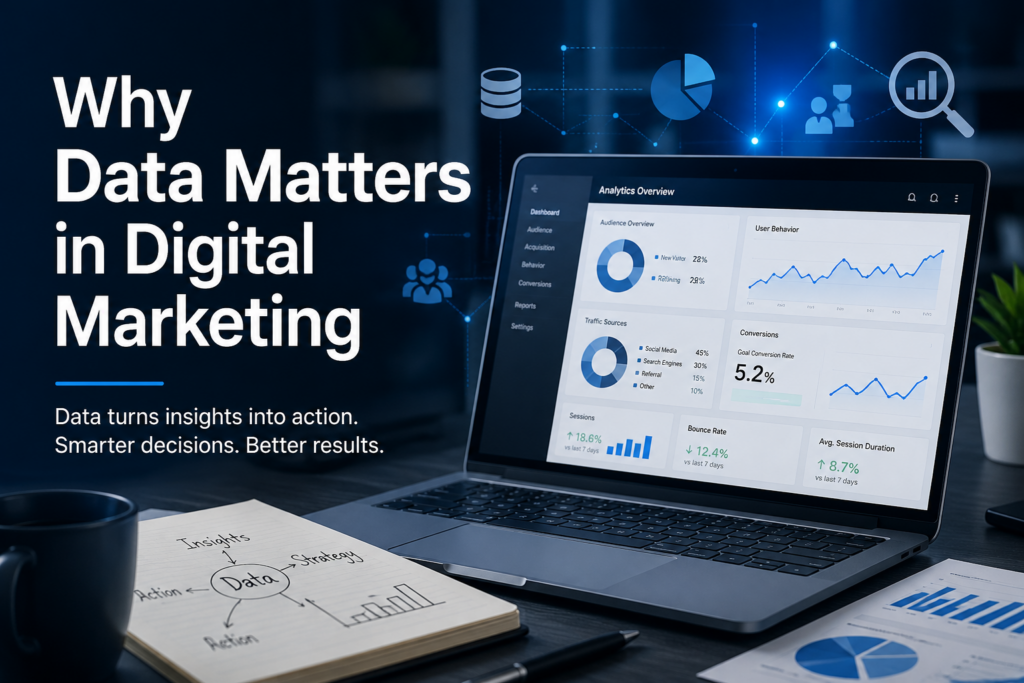
Why Data Matters in Digital Marketing Why data matters in digital marketing becomes clear when you realize marketing is no longer based on assumptions or guesswork. Businesses now have access to valuable information that helps them understand their audience, improve their strategies, and achieve better results. This information, known as data, has become one of the most powerful tools in digital marketing. Every action a user takes online generates data. Whether someone visits a website, clicks on an advertisement, likes a social media post, or makes a purchase, that interaction provides valuable insights. Marketers use this information to understand customer behavior and make informed decisions that improve marketing performance. One of the biggest advantages of data-driven marketing is the ability to understand the target audience. Successful marketing starts with knowing who your customers are, what they are interested in, and how they interact with your brand. Data helps businesses identify audience demographics, interests, online behavior, and purchasing patterns. With this knowledge, marketers can create more relevant content and campaigns that resonate with the right people.This is one of the clearest examples of why data matters in digital marketing today. Data also plays a crucial role in measuring the effectiveness of marketing campaigns. In traditional marketing, it was often difficult to determine whether a campaign was successful. Digital marketing, however, provides access to real-time metrics and analytics. Businesses can track website traffic, social media engagement, email open rates, conversion rates, and many other performance indicators. These insights help marketers understand what is working and what needs improvement. For example, imagine a company running two different social media advertisements. One advertisement receives a high number of clicks, while the other receives very little engagement. By analyzing the data, marketers can identify the factors that contributed to the success of the first advertisement and apply those learnings to future campaigns. This process helps businesses maximize their marketing efforts and achieve better outcomes. Another important benefit of data is personalization. Modern consumers expect personalized experiences when interacting with brands online. Data allows businesses to understand customer preferences and deliver content that is relevant to individual users. Personalized marketing can improve customer engagement, build stronger relationships, and increase conversion rates. When customers feel that a brand understands their needs, they are more likely to trust and engage with that brand. It’s a strong reminder of why data matters in digital marketing when building customer relationships. Data also helps marketers make smarter budgeting decisions. Marketing budgets are often limited, so it is important to invest resources where they will generate the greatest return. By analyzing campaign performance, businesses can identify which channels, advertisements, and strategies deliver the best results. This allows them to allocate their budget more effectively and avoid spending money on activities that do not contribute to business growth. Search Engine Optimization (SEO) is another clear answer to why data matters in digital marketing. SEO relies heavily on data such as keyword performance, search trends, website traffic, and user behavior. By analyzing this information, marketers can optimize their websites to improve search engine rankings and attract more organic traffic. Data-driven SEO strategies help businesses increase visibility and reach potential customers more effectively. Social media marketing also depends on data and analytics. Platforms such as Instagram, Facebook, LinkedIn, and X provide detailed insights about audience engagement and content performance. Marketers can see which posts generate the most interactions, what times audiences are most active, and which types of content perform best. These insights help businesses create more engaging content and strengthen their social media presence. As a digital marketing student, I have learned that data is much more than numbers and charts. It tells the story behind customer behavior and business performance. Every metric provides an opportunity to learn, improve, and make better decisions. Understanding how to interpret data is becoming an essential skill for anyone pursuing a career in digital marketing. However, collecting data alone is not enough. Businesses must know how to analyze and use that data effectively. The true value of data lies in turning insights into action. Marketers who can identify patterns, understand customer needs, and make informed decisions based on data are more likely to achieve successful outcomes. Looking ahead, the importance of data in digital marketing will continue to grow. Advances in technology, artificial intelligence, and analytics tools are providing businesses with even more opportunities to understand their customers and optimize their marketing strategies. Companies that embrace data-driven decision-making will be better positioned to compete in an increasingly digital marketplace. In conclusion, this is why data matters in digital marketing; data has become the foundation of modern marketing. It helps businesses understand their audience, measure performance, personalize customer experiences, improve marketing strategies, and make smarter decisions. By leveraging data effectively, marketers can create campaigns that deliver meaningful results — proof of why data matters in digital marketing and long-term business growth.. If you want help turning these insights into a real strategy, explore my digital marketing services. In a world where digital interactions generate valuable insights every second, this is exactly why data matters in digital marketing; it is not just important, it is essential for success.
understanding your target audience
Uncategorized

Understanding Your Target Audience: The Key to Successful Marketing

Understanding Your Target Audience: The Key to Successful Marketing Every successful marketing campaign I’ve come across starts in the same place: actually understanding your target audience. Not in a vague “young professionals” kind of way, but really knowing who you’re talking to. It doesn’t matter how clever the ad is or how good the caption sounds — if it’s not landing with the right person, none of that effort really means much. A target audience is basically the group of people who are actually likely to care about what you’re offering. They usually have things in common — age, where they live, what they’re into, how much they earn, how they spend time online. Once you actually understand your target audience at that level, your marketing stops feeling like you’re shouting into a crowd and starts feeling more like you’re just talking to someone. I’ll be honest, one mistake I made early on — and I still see a lot of people make — is trying to appeal to everyone. It feels like the safe move. Why would you exclude people, right? But broad marketing almost never works the way you’d hope. If your message is built for “everyone,” it usually ends up resonating with no one in particular. Understanding your target audience means accepting you’re not trying to please the whole internet. You’re trying to reach a specific group who might actually buy from you. So how do you figure that out? Research, mostly. Real research — surveys, feedback, website analytics, whatever your social media insights are telling you. Not guesses. The businesses that do well online usually aren’t the ones with the biggest budget. They’re the ones who bothered to actually learn who they’re talking to before spending money on ads. Demographics help, sure — age, income, education, location. But honestly, that’s just the surface. A 22-year-old college student and a 45-year-old working parent might technically fall into the same “interested in fitness” bucket, but they’ll respond to completely different tone, platform, even time of day. Understanding your target audience means going past the label and asking what’s actually shaping how this particular person thinks and buys. Behavior tells you more than demographics ever will, though. What do people actually stop scrolling for? What gets a comment, a share, or just gets ignored completely? Every platform is basically handing you this data already. You don’t have to guess what your audience likes — they’ve already shown you, if you’re paying attention. This is where pain points come in too — the actual problems people are dealing with day to day. Good marketing isn’t just “here’s our product,” it’s showing someone you actually get what they’re struggling with, and that you might genuinely help. This is why a lot of marketers build out customer personas. Not as some fun creative exercise, but as a way to keep every piece of content grounded in an actual person instead of a vague guess. One thing I didn’t fully realize at first — this isn’t a one-time thing. Audiences shift. Trends move. What worked six months ago might feel stale now. Businesses that keep revisiting who they’re targeting, instead of setting it once and forgetting it, tend to stay relevant a lot longer than the ones who don’t. There’s also a difference between who buys and who actually influences that decision. Sometimes the person using something isn’t the one paying for it — like a parent buying for their kid, or a manager approving a purchase someone else on the team actually wanted. Understanding your target audience sometimes means paying attention to both sides of that relationship, not just whoever hits “buy” at the end. Competitor research helps here too, honestly more than people give it credit for. Watching who your competitors are targeting — and more importantly, who they’re missing entirely — can show you real gaps. Sometimes the best insight isn’t even about your own customers. It’s about noticing what nobody else in your space is bothering to address. And none of this really works without some actual empathy mixed in. Data tells you who your audience is. It takes something else — curiosity, maybe — to understand why they make the choices they do. The best marketing I’ve seen doesn’t feel like it came out of a spreadsheet. It feels like whoever made it actually understands what a normal day looks like for the person they’re trying to reach. Social media makes a lot of this easier than it used to be, at least. Instagram, Facebook, LinkedIn, and X all hand you insights now — what people engage with, when they’re online, what topics actually get a reaction. Marketers a decade ago just didn’t have this kind of visibility into their audience. Digital advertising benefits from all this too. Instead of paying to show your ad to literally anyone, you can target the specific people who are actually likely to respond, based on their interests, behavior, and demographics. For small businesses especially, where every rupee spent on ads has to count, that’s a genuinely big deal. Content marketing works the same way. People engage with content that actually speaks to something they care about — a blog post, a social update, an email, doesn’t matter. Understanding your target audience is what makes the difference between content that gets scrolled past and content that actually gets read. Testing ties all of this together, I think. Running small campaigns, comparing two versions of the same message, watching which one actually performs better — that replaces guessing with real evidence. Instead of assuming what your audience wants, you let their actual behavior tell you. I’m still learning a lot of this myself as a digital marketing student, but if there’s one thing that’s really stuck with me, it’s that marketing was never really about the product. It’s about the person on the other end of it. Every audience is different, and the time spent actually learning who they are ends up

social media marketing
Uncategorized

Why Social Media Marketing Matters for Small Businesses

Why Social Media Marketing Matters for Small Businesses In today’s digital age, it’s hard to scroll through a phone for more than a few minutes without running into a small business trying to connect with people online. A local bakery showing off the morning’s fresh bread, a boutique owner going live to unveil new arrivals, a freelancer sharing quick tips to grow their followers— it’s everywhere now. Social media marketing has quietly become one of the most powerful tools a small business can use, and it didn’t happen overnight. It crept in slowly, platform by platform, until ignoring it simply stopped being an option. What makes social media marketing so different from traditional advertising is the kind of relationship it creates. A newspaper ad talks at people once and then disappears. Social media marketing keeps talking — showing up in someone’s feed day after day, building familiarity, and eventually earning trust. For small businesses working with tight budgets, that kind of ongoing presence is worth more than almost anything money alone can buy. Social media marketing has a major benefit – it helps people know about your business. If nobody knows you exist, they won’t buy from you. But with social media, even a small business can reach a lot of people without spending a lot of money. If you post things regularly and share stuff that people are actually interested in, they’ll start to remember your business. And that’s exactly when you want them to – when they’re about to make a decision to buy something.  Platforms like Instagram and Facebook make it easy for small businesses to get their name out there and be seen by thousands of people. By being consistent and sharing relevant content, you can make your business more well-known and increase the chances of people choosing you when they need something. Social media has changed the way businesses interact with their customers. It’s no longer just about a company sending out a message and hoping someone listens. Now, customers can talk back and expect a response. They can comment on posts, ask questions, and share things with their friends.  This back-and-forth conversation is where trust is built, and it happens one interaction at a time. It’s a two-way street, not just a one-way message. Businesses can use social media to connect with customers in a way that feels personal and real.  This can lead to stronger relationships and a sense of loyalty. When customers feel heard and understood, they’re more likely to trust a business and keep coming back. Social media makes it possible for businesses to have these kinds of conversations and build trust with their customers. For smaller companies, trust is really important because people like to support businesses they feel a personal connection with. When you share everyday moments, like what’s happening behind the scenes, or recognize a customer who’s been loyal, it makes your brand feel more real and relatable. Even owning up to a mistake can be a good thing, as it shows you’re honest and transparent.  This kind of authenticity is hard for big companies to match, and it’s exactly what social media marketing can help smaller businesses achieve. By being genuine and true to who you are, you can build loyalty with your customers, rather than just trying to make a quick sale. The cost is a major factor to consider. Traditional advertising methods like TV, radio, and print ads can be really pricey. And the thing is, they often end up reaching people who just aren’t interested in what you’re offering. But targeting changes the game. With Facebook and Instagram ads, businesses can narrow down their audience by location, age, interests, and even browsing habits. This means that marketing dollars are being spent on people who are actually likely to make a purchase.  This level of precision is a big reason why social media marketing has become the go-to strategy for small business owners who are careful with their budget – and let’s be real, that’s most of them. By using social media, businesses can make the most of their marketing dollars and reach the people who are most likely to be interested in their products or services. Having a strong presence on social media is not just about getting likes, it’s also a way to drive traffic to your website. When you share something new, like a product photo, a blog post, or a special offer, and include a link, you’re giving your followers a direct way to visit your site. This can lead to more people looking at your site, which can then turn into more inquiries, sales, and even loyal customers.  If you combine this with sharing content that’s actually useful to people, like videos that teach them something, quick tips that make their lives easier, or honest looks at what goes on behind the scenes, your business starts to feel more like a trusted source of information rather than just someone trying to sell them something.  This helps build trust with your followers and can make them more likely to come back to your site again and again. By using social media in this way, you can create a connection with your followers that goes beyond just selling them something. You can show them that you’re a business that cares about helping them and providing them with value, which can lead to a loyal customer base and ultimately, more sales.Paying attention to what customers are saying is a really valuable part of running a business. When people leave comments, reviews, or send messages, they’re basically giving you feedback on what they think, without you even having to ask. You might find out that people really like a product, but they wish it came in different sizes. Or maybe the checkout process is confusing, and that’s stopping people from buying. This kind of feedback is free, and you get it right away, which is a big advantage. But a lot of business

Scroll to Top